
Polycab India, Power Finance Corporation, Shriram Finance, and Union Bank of India appear poised to transition from the mid-cap to the large-cap category within the domestic mutual fund industry. Their market capitalisation (m-cap) now ranks among the top 100, which is the threshold for the large-cap universe defined by the Securities and Exchange Board of India.

Unemployment has been rising among the young, with authorities suspending data disclosures after youth unemployment crossed 20 per cent.

When billionaire Warren Buffet started his first fund in 1956 with eleven investors, he invested a token amount of $100 of his own money as "skin in the game". Buffet denies it but he is credited with coming up with the term describing those running a fund risk some of their own money in it. The mutual fund (MF) industry has more than Rs 81,200 crore riding on its schemes, shows a Business Standard analysis of data on sponsor and associate contributions from the Association of Mutual Funds in India (Amfi).

Nearly two million postcards and eight million letters pass through India's post offices daily.
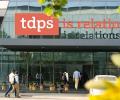
A new regulation concerning the disclosure of family arrangements by listed companies is exacerbating rifts between feuding shareholders. The latest example is Bengaluru-based TD Power Systems (TDPS), currently enmeshed in a legal dispute before the Karnataka high court over ownership of its 16 per cent equity. Vijay Kirloskar, who is asserting a claim over the 16 per cent stake held by Mohib Khericha (chairperson of TDPS) and Nikhil Kumar (managing director of TDPS and nephew of Kirloskar), has sent a letter to the market regulator, Securities and Exchange Board of India (Sebi), and stock exchanges. He accuses TDPS of insufficient disclosure concerning shareholder agreements.

The shift to a shorter T+3 settlement cycle for initial public offerings (IPOs) will be a big test of the domestic market structure, requiring players in the ecosystem to work harder to meet the squeezed timelines, according to industry insiders. The Securities and Exchange Board of India (Sebi), has announced that the transition to the T+3 cycle will be voluntary starting next month and mandatory from December 1. The new mechanism will necessitate quicker confirmations from banks and speedy verification of permanent account numbers (PANs) for all applicants.

Companies, which missed out on listing earlier, are giving it another shot but with significantly-reduced issue sizes. In the recent past, companies such as TVS Supply Chain Solutions, Suraj Estate Developers, and ESAF Small Finance Bank have re-filed their draft red herring prospectuses (DRHPs) with the Securities and Exchange Board of India (Sebi). This came after they slashed their issue sizes by 20-60 per cent.

The share of foreign companies in private sector investments, directed towards building new factories and other facilities, has declined over the past six months. A mix of large domestic announcements and relatively lower growth in foreign capital expenditure (capex) plans have played a role, although foreign investments remain near record levels. The share of foreign companies in the overall private sector investments over the four quarters ended June 2023 has dipped to 14.9 per cent, as shown by a Business Standard analysis of data from the project tracker Centre for Monitoring Indian Economy.

Jio Financial Services, a unit of Mukesh Ambani's Reliance Industries (RIL), got valued at Rs 1.66 trillion ($20 billion) following an hour-long special trading session conducted by stock exchanges on Thursday. Shares of RIL's unit got priced at Rs 261.85 apiece - higher than analysts' expectations of Rs 134-224 per share. The price was arrived at after calculating the difference between RIL's Wednesday (July 19) close of Rs 2,840 and Rs 2,580, the price discovered during the first-of-its-kind pre-trade session.

Following a more than 15 per cent surge in the National Stock Exchange (NSE) Nifty 50 from this year's lows, the spread between the 10-year government security (G-sec) and the Nifty earnings has approached the danger zone of 2 percentage points (ppt). At present, the G-sec yield is roughly 7.09 per cent, while the Nifty earnings are 5.12 per cent. As a result, the spread works out to 1.98 ppt, ever so slightly below the danger mark of 2 ppt.
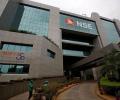
The National Stock Exchange (NSE) has made a fresh attempt at settling a regulatory investigation into the misuse of Trading Access Point (TAP) software at the bourse. The Securities and Exchange Board of India (Sebi) rejected a similar application in 2022. "NSE and its employees have filed a consolidated settlement application dated May 4, 2023, with Sebi.

Foreign portfolio investors (FPIs) are likely to get a reprieve from the Securities and Exchange Board of India (Sebi) in case of a passive or unintended breach of the thresholds that trigger additional disclosure norms. According to sources, FPIs whose single group exposure exceeds 50 per cent of their corpus will get 10 trading days to bring down their exposure below the prescribed level, without triggering the stricter disclosure norms. If total equity exposure of an overseas fund exceeds Rs 25,000 crore and it doesn't wish to provide additional disclosures, it will have three months to pare its exposure.

Investor confidence in unlisted shares was shaken after recent developments that saw online drugstore PharmEasy issuing new shares in a rights issue at a 90 per cent discount to its previous valuations and Reliance Retail's move to buy back and cancel shares held by public investors. Both stocks were, at one time, very popular in the unlisted market, with canny investors cornering them with the objective of benefiting from their listing. "Since investors have suffered losses on both counts, they will be careful when it comes to dealing in shares of unlisted companies," observes a broker dealing in unlisted shares, adding that there will be some rationality to the pricing.

Almost 25 per cent central government posts were vacant as of March 2022, compared to 9.4 per cent in March 2002.

With Housing Development Finance Corporation's (HDFC's) merger with HDFC Bank becoming effective on July 1, the merged entity is set to become the top weight in the benchmarks S&P BSE Sensex and the National Stock Exchange Nifty indices, dislodging the country's most valuable company, Reliance Industries (RIL), from its perch. HDFC will stop trading after July 13. At present, RIL has a weighting of close to 12 per cent in the Sensex and 10.3 per cent in the broad-based Nifty. Meanwhile, HDFC Bank and HDFC have weights of 9.9 per cent and 6.8 per cent in the Sensex and 8.8 per cent and 6 per cent in the Nifty, respectively.

The US market has been a standout performer this year, with the benchmark Standard and Poor's 500 (or simply the S&P 500) gaining over 16 per cent during the first half of calendar year 2023 (CY23) in what was its best first-half show since 2019. By comparison, India's National Stock Exchange Nifty 500 has gained 6.4 per cent. On the surface, it appears that the US markets have done exceedingly well. However, a deeper analysis reveals the gains in the domestic market to be more well-spread.

New investment projects announced in the manufacturing sector declined in the three months ended June 2023. The value of new projects was lower than in the March quarter, as well as the year-ago period, shows data from project tracker the Centre for Monitoring Indian Economy (CMIE). The new project announcements worth around Rs 85,000 crore in the manufacturing segment in June were a 48 per cent decline from the Rs 1.6 trillion in March and a 66 per cent decline from the Rs 2.5 trillion seen in June 2022.

After pulling out $17 billion in calendar year 2022, foreign portfolio investors (FPIs) have pumped $7.3 billion back into equity markets so far this year. The turnaround in foreign flows has helped domestic markets exceed the all-time highs chalked up in December 2022 and bounced back more than 10 per cent from this year's lows. However, a big nugget of FPI inflows seen this year could be off the back of two factors: exchange-traded funds (ETFs) and block deals.

Gift Nifty will provide Indian investors cues on how domestic markets could react to global events.

'Even where we are now today, the growth rates are very good, but we need to get to 8-9 per cent growth in the years to come.'
 © 2026 Rediff.com - Advertise with us - Disclaimer - Privacy Policy - Sitemap - Feedback - About us - Terms of use - Grievances